


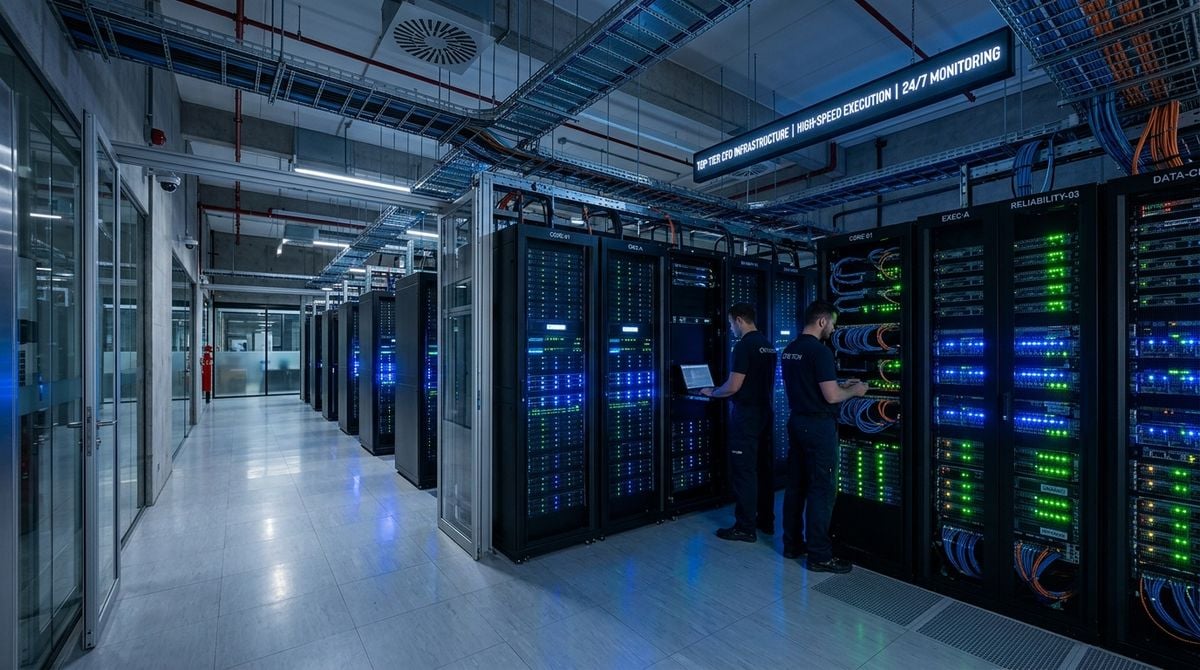
Every expanding business eventually faces the challenge of rising digital infrastructure expenses. In the early stages of operation, server hosting and basic network connectivity appear as modest, predictable monthly line items. However, as web traffic increases, customer interactions multiply, and operational data accumulates, hosting environments become significantly more complex. Without active financial oversight, technical requirements can expand unchecked, turning necessary digital infrastructure into a persistent drain on operating capital.
A common problem inside growing organizations is the operational divide between technical engineering departments and financial planners. System architects naturally prioritize stability, speed, and surplus capacity to prevent downtime during unexpected surges. Meanwhile, finance teams often view server invoices through a retrospective lens, discovering bloated bandwidth fees and redundant server clusters only after bills arrive. Bridging this communication gap requires a structured approach to budgeting, ongoing resource audits, and deliberate procurement strategies.
Auditing Existing Infrastructure and Bandwidth Commitments
A disciplined financial plan begins with a comprehensive audit of existing technical assets. Many enterprises pay month after month for provisioned server instances, inactive staging environments, and legacy storage volumes that are no longer tied to active revenue streams. Because technical teams move quickly between development sprints, temporary servers created for testing purposes are frequently left running indefinitely in the background.
Conducting a monthly inventory of computing resources allows financial managers to align ongoing vendor costs with real-world business utility. Finance leads should sit down with systems administrators to map every recurring bill to a specific application, department, or client project. When teams evaluate their hosting arrangements, staying informed through tech review publications like hostistry.com helps finance leads understand current hosting tier options, hardware shifts, and practical performance benchmarks. This technical awareness equips finance teams to ask constructive questions during vendor evaluations rather than accepting default renewal terms.
Network bandwidth consumption represents another overlooked driver of infrastructure expenditure. Hosting providers typically charge premium rates for outbound data transfers that exceed contracted baseline allocations. By auditing historical traffic trends, businesses can determine whether excess costs stem from genuine user expansion or inefficient file delivery. Implementing content caching strategies and optimizing media delivery can immediately lower monthly data transfer volume without compromising the digital experience for end users.
Structuring Predictable Budgets for Network Expansion
Predictability is one of the greatest assets in corporate budgeting, yet network scaling often feels notoriously unpredictable. Spikes in digital activity can produce sudden swings in utility-based hosting bills, making quarterly forecasting difficult. To build stability into the balance sheet, finance professionals must distinguish between core baseline requirements and elastic, demand-driven capacity.
Core baseline infrastructure should ideally be secured through reserved capacity agreements or committed use terms. When an organization can forecast a consistent baseline of computing needs, long-term vendor commitments frequently unlock preferential pricing compared to standard hourly rates. Keeping track of broader network developments and internet industry changes through platforms such as statlab-dev.com enables budget planners to anticipate data routing shifts and emerging network infrastructure demands before signing multi-year agreements. Understanding how global connectivity trends evolve gives leadership greater leverage during vendor negotiations.
Meanwhile, elastic capacity should be cordoned off within a dedicated contingency reserve. Instead of purchasing excessive dedicated server capacity to handle brief, infrequent traffic peaks, modern hosting environments allow for on-demand expansion. Establishing clear financial thresholds for elastic resource usage ensures that system scaling is directly supported by available cash flow rather than surprise billing reconciliations.
Aligning Technical Architecture with Capital Priorities
Strategic technology management requires deciding whether to direct resources toward capital expenditures or ongoing operational expenditures. In traditional on-premise or colocation facilities, businesses invest heavily in physical server hardware, cooling equipment, and high-speed network routing devices. While this model demands substantial upfront cash reserves, it provides total control over assets and eliminates variable monthly service fees.
Conversely, managed hosting and modern network service platforms convert infrastructure costs into ongoing operating expenses. This model preserves liquidity for core business operations and allows organizations to scale computing capacity up or down as market conditions dictate. Much like the considerations outlined in our commercial media capital planning guide, evaluating long-term technical infrastructure requires balancing initial hardware outlay against recurring operational costs. Choosing the right path requires financial officers to evaluate current borrowing costs, balance sheet health, and corporate tax treatment regarding equipment depreciation versus operational deductions.
In many cases, an effective financial architecture relies on a hybrid deployment. Sensitive, predictable database workloads might run on stable, dedicated hardware environments, while public-facing web applications reside in flexible hosted network layers. This separation ensures that capital allocations remain closely tied to the specific performance demands and risk profiles of different business units.
Practical Frameworks for Ongoing Cost Containment
Sustainable cost control in technology hosting does not happen by accident; it requires repeatable operational frameworks. When operational accountability is distributed across multiple engineering teams, individual developers may select server tiers based purely on convenience rather than financial prudence. Establishing centralized procurement guidelines ensures that every technical deployment follows standard organizational policies.
Implementing targeted monitoring tools can provide real-time visibility into resource utilization across all active data centers. When server capacity sits idle for extended periods, designated administrators should receive prompt notifications to scale down or reallocate those computing resources. Establishing a routine review checklist helps organizations maintain financial discipline without disrupting day-to-day software development.
Organizations looking to maintain continuous cost control should focus on several foundational habits:
- Categorize monthly hosting charges by department or functional workload to establish clear accountability.
- Terminate idle compute instances, obsolete staging environments, and unattached network storage volumes.
- Negotiate volume discounts on multi-year network bandwidth agreements for predictable enterprise workloads.
- Conduct collaborative financial and technical reviews before launching major deployment cycles.
By treating cloud and hosting spend as an active operational discipline rather than an unavoidable overhead expense, organizations can protect operating margins. Cross-departmental transparency also encourages engineering teams to design code and database queries that consume fewer system resources, creating natural cost efficiencies from the inside out.
Long-Term Governance and Sustainable Expansion
As enterprise networks mature, long-term governance policies become necessary to prevent cost creep. Governance begins with setting tiered approval thresholds for provisioning new digital resources. Routine updates and standard bandwidth tier increases can proceed with team-level sign-off, while major infrastructure migrations or new regional network expansions should require formal executive review.
Furthermore, vendor diversification is an essential element of sound risk management. Relying entirely on a single hosting conglomerate can leave an enterprise vulnerable to sudden pricing changes, contractual shifts, or unexpected regional network outages. By designing portable architecture that can transition between hosting providers, leadership maintains competitive pricing leverage during annual renewal discussions.
Ultimately, server hosting expenses and network infrastructure should be viewed as strategic investments that drive enterprise value. When finance leaders collaborate closely with technical teams, organizations can build scalable, resilient digital environments that support corporate growth without jeopardizing financial stability.