


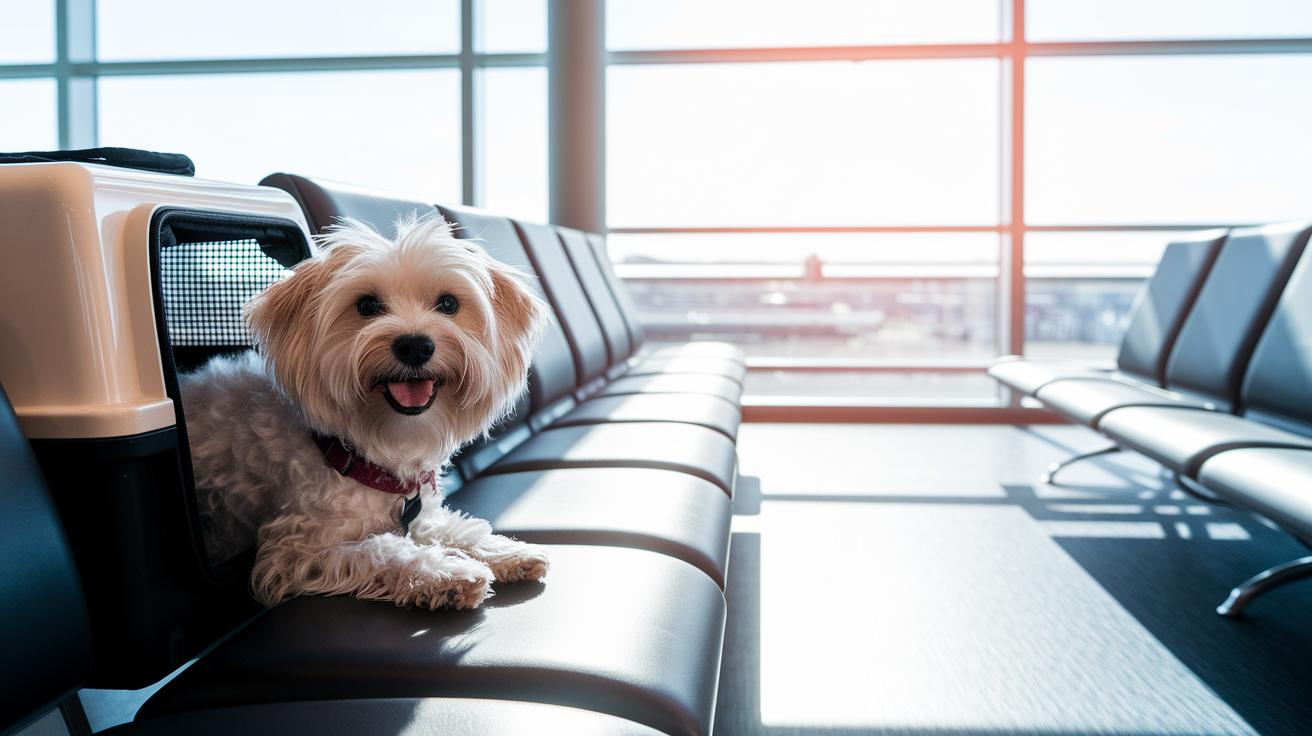
Ever thought about how smooth flying with your pet could be? Lots of pet parents, just like us, face strict airline rules and those unexpected last-minute surprises. In this guide, we’ll share simple, friendly tips to get your furry buddy ready for the skies.
Imagine your pet snuggled up in a travel carrier that feels almost as cozy as home, with a soft blanket and a comforting smell. We’ll walk you through checking pet policies, planning a few practice runs, and other easy steps to make flying safe and fun for both of you.
So, ready to turn a stressful flight into a happy adventure? Let’s dive in.
Essential Guide to Air Travel With a Pet: Policies, Preparation, and Safety
First, do your homework by checking out the pet policies for each airline. Most airlines have clear rules about pet size, breed, and whether your furry friend can ride in the cabin or has to fly as cargo. A quick look at the airline’s website before booking can save you a lot of last-minute hassle.
Next, get your pet’s travel carrier ready well ahead of time. Pick a carrier that fits the airline’s size guidelines and help your pet get comfortable with it. Try short practice sessions at home, offering praise and treats, until your companion feels safe inside, almost like a little adventure right at home.
When booking your flight, remember that airlines typically limit the number of pets in the cabin. Because spots can fill up fast, it’s best to secure your pet’s place as early as possible. And keep in mind, buying an extra seat for your pet is rarely an option.
At the airport, stick to safety steps. When you go through TSA screening, take your pet out of the carrier so that both the carrier and your other belongings can pass through the X-ray machine. Use a sturdy leash or fitted harness to keep your pet safe and nearby, just as you would on a sunny walk at the park.
Also, be mindful of breed-specific concerns. Pets with short noses, like Pugs and Bulldogs, may face breathing challenges during air travel, especially if they’re flying in cargo. Service animals have more flexible rules under the law, while emotional support animals must remain in their carriers.
Keep this checklist in mind:
- Check each airline's in-flight pet policies
- Choose and get your pet used to the right carrier
- Confirm if your pet can fly in the cabin when booking
- Take extra care for pets with short noses
Pre-Flight Planning and Required Documentation for Air Travel With a Pet

Before booking that flight with your furry friend, take a moment to gather and double-check all the necessary documents. It’s best to start with a simple checklist and confirm with your airline what they need. Some airlines, like Alaska and Delta, require a health certificate dated within the last 10 days. Others, such as American Airlines, might ask for one issued in the past 20 days, while Hawaiian Airlines could have a 14-day rule for special routes.
Most airlines also need to see your pet’s vaccination records, especially for rabies, to keep everyone safe. If you’re planning an international trip, you might also need extra papers like import/export permits, quarantine paperwork, or a special license for your destination. Think of these documents as your pet’s boarding pass; every paper helps ensure a smooth, stress-free journey for your beloved companion.
Here’s a handy checklist to keep you on track:
| Item | Description |
|---|---|
| Veterinary Exam Results | Shows your pet is fit and ready for the flight |
| Health Certificate | Must meet the airline’s date requirements |
| Rabies Vaccination Record | Essential for ensuring your pet’s safety on any trip |
| Microchip Registration Details | Helps to verify your pet’s identity during travel |
| Import/Export Permit & Quarantine Documents | Needed only for international journeys |
Getting these documents in order now will save you from last-minute hassles and extra charges later. Picture your pet’s joyful wag or content purr as you breeze through the travel process, knowing that everything is all set for a happy adventure together.
Airline-Specific In-Flight Pet Regulations and Fee Structures
Flying with your furry friend can be a lot less stressful when you know each airline’s rules. For example, Alaska Airlines asks that dogs flying as cargo have a health certificate issued within 10 days before departure and 30 days before coming back. But if your pet is riding in the cabin, you don’t need that certificate at all. American Airlines has a similar rule for cargo pets, requiring certificates dated within 20 days of both departure and return, while cabin travelers fly certificate-free. Delta Air Lines also needs a health certificate for cargo pets within 10 days, but again, pets in the cabin are exempt.
Frontier and Spirit handle things a bit differently. They don’t need a certificate for cabin travel unless you’re heading to places like the US Virgin Islands or Puerto Rico. In those cases, a proof of rabies vaccination is required. Hawaiian Airlines is extra careful when flying between the U.S. mainland and Hawaii, asking for a health certificate dated within 14 days. Meanwhile, JetBlue and Southwest make sure your pet meets specific licensing and vaccination rules at your destination.
Airline fees for pet travel can also be different. Many airlines charge between $95 and $150 each way for pets in the cabin, while fees for cargo travel are usually higher. The extra charges depend on your pet’s weight and the size of its approved crate. I even heard one pet parent mention, “I once spent nearly twenty minutes comparing fees and restrictions between carriers to avoid any surprises on the day of travel!”
| Airline | Health Certificate Requirement | Special Notes |
|---|---|---|
| Alaska Airlines | Cargo: 10/30 day rule; Cabin: None | Strict cargo guidelines |
| American Airlines | Cargo: 20-day rule | Caveat for cargo travel |
| Delta Air Lines | Cargo: 10-day rule | Cabin exempt |
| Hawaiian Airlines | 14-day certificate for specific routes | Due to state requirements |
Before booking your flight, take a moment to review each airline’s fee structure and pet travel rules. That way, you and your companion can have a smooth, worry-free trip.
Selecting and Preparing the Right Pet Carrier for Cabin or Cargo Travel

When you're getting ready to travel with your pet, it's important to know that most airlines want soft-sided carriers for cabin trips. They usually stick to a size of about 18"L × 11"W × 11"H so the carrier can slide just under the seat while still giving your pet a comfy space. Always check that the carrier sports a sticker or label indicating it's approved by your airline, it's a small detail that really makes a difference.
For pets traveling as cargo, the rules change a bit. The carrier must be IATA-approved, which means it needs to be hard, have ventilation on three sides, and a leak-proof bottom. Plus, it should be big enough for your pet to stand, turn, and lie down without feeling cramped. A carrier that's too tight can make the journey stressful, and we all want our furry friends to feel safe.
It really helps to get your pet used to its carrier long before the big trip. Try placing a favorite treat or a soft, cozy blanket inside the crate. Imagine your pet stepping in and finding a little haven filled with goodies, it turns the carrier from a scary box into a comfy retreat. Such positive experiences go a long way in building trust.
Here are a few quick reminders:
- Check that the carrier is airline approved.
- Make sure in-cabin carriers match the 18"L × 11"W × 11"H guideline.
- Ensure cargo crates are rigid, ventilated on three sides, and leak-proof.
- Help your pet get comfortable by introducing treats, a cozy blanket, and lots of praise before the flight.
Booking, Airport Check-In, and Security Procedures for Flying With a Pet
When planning a flight with your furry friend, start by reserving their spot online. Keep in mind many airlines only allow 2 to 4 pets per flight, think of it like grabbing your favorite seat at a busy diner before it’s too late.
At check-in, be sure to have your pet’s health certificate and crate documents handy. It’s also a good idea to double-check that your pet meets the airline’s requirements for breed, age, and weight.
During TSA screening, gently remove your pet from their carrier while keeping them secure with a leash or harness. Then place the empty carrier on the X-ray conveyor belt so it can be quickly scanned, and let your pet pass through right after.
Here's a simple breakdown:
| Step | What to Do |
|---|---|
| Booking | Secure your pet’s spot online early |
| Check-In | Bring along health certificates and crate documentation; ensure your pet meets eligibility requirements (breed, age, weight) |
| TSA Screening | Keep your pet safe with a leash/harness; send the empty carrier through the X-ray |
In-Flight Care, Comfort Tips, and Stress Management for Pets

Give your pet a light meal about 3–4 hours before you leave, and try to limit their water to about an hour before boarding. This little change helps their tummy settle, which means they’ll be more comfortable on the flight. For example, a small snack, maybe half of their usual meal, can keep hunger at bay without overfilling them.
A bit of exercise before heading to the airport can work wonders too. Consider taking your furry pal for a brisk walk or playing a quick game to burn off extra energy. Once they've used up that energy, they’re likely to relax more easily in their carrier.
Inside the travel carrier, put in some absorbent bedding and toss in a favorite toy to create a cozy, familiar spot. Imagine your pet nestling into a soft blanket with their beloved toy, just like at home. These simple comforts can really help ease any anxiety.
If your pet gets rattled by turbulence or sudden movements, a chew toy can be a great distraction. And if you have an anxious cat, a few spritzes of a pheromone spray might calm them right down. Also, remember that most airlines limit the total weight (pet plus carrier) to about 15–20 pounds. For very small pets, some airlines even let them travel in soft pouches or backpacks, offering a comfy spot on board.
| Tip | Description |
|---|---|
| Meal Timing | Feed 3–4 hours before departure |
| Water Limit | Limit water about 1 hour before boarding |
| Pre-flight Exercise | Give them a walk or play session to use up energy |
| Comfort Items | Add cozy bedding, a favorite toy, plus a chew or pheromone spritz |
Try these ideas to help your pet feel calm and happy during the flight.
Health, Breed Considerations, and Service Animal Protocols in Air Travel
Make sure your furry friend is feeling great by scheduling a vet check-up about two weeks before you fly. This little visit gives your vet a chance to make sure your pet is ready for the journey and to spot any hidden issues. It’s especially important for short-nosed pals like Pugs, Bulldogs, or Persians who might have a tougher time breathing. I remember one pet parent saying, "My Bulldog literally had to be re-checked by the vet before we could even board the plane!"
When it comes to service animals, only those specially trained under the ADA can travel in the cabin. Emotional support animals, although super comforting, need to stay snug in their carriers during the flight. It helps a lot to double-check these rules before you travel, so you won’t run into any surprises at the airport.
For pets with extra needs, like seniors, expectant moms, or little ones with health concerns, a bit of extra care goes a long way. Getting more vet documentation can keep things smooth. Think of it like planning a gentle route that avoids extreme temperatures and stressful situations for your pet. These extra steps, along with clear documentation, really help make traveling safer for your special companion.
Keep these safety tips in mind for your travel buddy:
- Confirm vaccination records and recent health exams.
- Follow airline-specific rules for service and emotional support animals.
- Prepare extra documentation if your pet has any special needs.
Also, remember that keeping an eye on your pet during the flight is key. A few familiar toys, a little chew, or a soft blanket in their carrier can go a long way to keep them calm. And if you're taking an exotic companion along, be sure to double-check all the rules so your pet’s journey stays comfy and safe.
Post-Flight Procedures and Destination-Specific Requirements for Pet Travelers

After your pet lands, there’s still some important stuff to handle, think customs checks and possible quarantine stops. Depending on your destination, your pet might need to spend anywhere from 5 days to as long as 6 months in quarantine. For example, if you’re headed to Hawaii, you’ll need to show a rabies vaccination record along with a health certificate dated within the last 14 days. It’s just like having your pet’s boarding pass ready for a smooth arrival.
Next, if your journey takes you to a place like the European Union, be sure to have an EU pet passport and proof that your pet’s microchip is registered. These extra documents keep things simple for local authorities, ensuring your furry friend’s transition is as smooth as a wagging tail.
If you have a larger breed, there may be an extra step in the process. Some airlines ask for pre-approval for in-cabin or cargo arrangements due to size restrictions, kind of like reserving that special seat on your favorite train ride.
And don’t forget pet travel insurance. This little backup can help cover unexpected medical issues, delays, or even quarantine fees, taking a big worry off your travel checklist.
Here's a quick checklist to help you get through arrival:
| Requirement | Detail |
|---|---|
| Quarantine | Duration varies from 5 days to 6 months based on risk |
| Customs Documents | Health certificates, pet passport, microchip proof |
| Large Breeds | May need pre-approved accommodations |
| Travel Insurance | Covers emergencies, delays, quarantine fees |
By checking off these requirements, you help ensure that every part of your pet’s journey is as enjoyable and stress-free as possible. Have you ever noticed how a little preparation can make a big difference in making travel fun for both you and your furry friend? Enjoy your adventure together!
Final Words
In the action, this guide has walked you through the essential details for air travel with a pet. It touched on pre-flight planning, airline-specific rules, selecting the right carrier, and keeping your furry friend comfortable and secure.
By following these steps, you’ll be set for a smooth flight experience. Embrace these tips and look forward to stress-free skies that help make every moment with your pet a little brighter.
FAQ
Air travel with a pet on Delta
Air travel with a pet on Delta follows Delta’s guidelines for both cabin and cargo travel. Delta requires recent health certificates for cargo travel, emphasizes proper carrier dimensions, and limits cabin spots, making it important to book early and prepare thoroughly.
What are the guidelines for domestic air travel with a pet?
Domestic air travel with a pet means following airline-specific rules for cabin or cargo travel. Most airlines need a health certificate, proper carrier, and reservation due to limited spots, so plan ahead and review your chosen carrier’s policies.
What do I need to know about international pet air travel?
International pet air travel requires extra documentation like updated health certificates, vaccination records, and permits. Airline rules vary widely, so check quarantine regulations and pre-flight checklists to ensure your pet meets all destination-specific requirements.
How does flying with a dog in-cabin work?
Flying with a dog in-cabin involves selecting an approved soft-sided carrier that fits under the seat, booking early since spots are limited, and following airline rules on health certificates and size, ensuring a comfortable flight experience.
What is American Airlines’ pet policy?
American Airlines’ pet policy includes guidelines for both cabin and cargo travel, with requirements such as health certificates, specific carrier dimensions for in-cabin pets, and advanced reservations due to limited seating for animals.
How can I travel with my pet on a plane and what does it cost?
Traveling with your pet on a plane means meeting airline requirements like health certificates, appropriate carriers, and booking early. Costs vary from around $95 to $150 each way for in-cabin travel, with higher fees for cargo.
What are the new rules for flying with pets?
New rules for flying with pets emphasize recent health certificates, updated vaccination records, and detailed booking protocols. Airlines may now have stricter breed and size regulations, so always check the most current guidelines before your flight.
Which airlines allow you to fly with pets?
Major U.S. airlines like United, American, Delta, Southwest, Alaska, and Frontier all allow pet travel. Each carrier sets specific rules regarding health documentation, carrier dimensions, and in-cabin pet limits, so review their policies before booking.