

Transforming a backyard pool area into a captivating evening retreat relies heavily on strategic illumination. In Western New York, where summer evenings are cherished, proper pool lighting extends swimming hours, enhances poolside safety, and creates a dramatic visual focal point for outdoor entertaining. Whether you are installing a new inground swimming pool or upgrading an existing setup, choosing the right lighting technology and placement strategy is essential.
From energy-efficient color-changing LEDs to subtle hardscape accent fixtures, regional pool builders emphasize solutions built to withstand harsh seasonal weather variations while delivering maximum aesthetic appeal. Below is an in-depth breakdown of the primary lighting options, placement strategies, smart controls, and winterization precautions recommended across Erie County and Western New York.
Popular Pool Lighting Technologies Recommended by Local Builders
Lighting technology for residential pools has advanced far beyond traditional single-incandescent bulbs. Modern pool systems prioritize energy efficiency, longevity, and dynamic color customization.
The primary lighting types recommended for residential pools include:
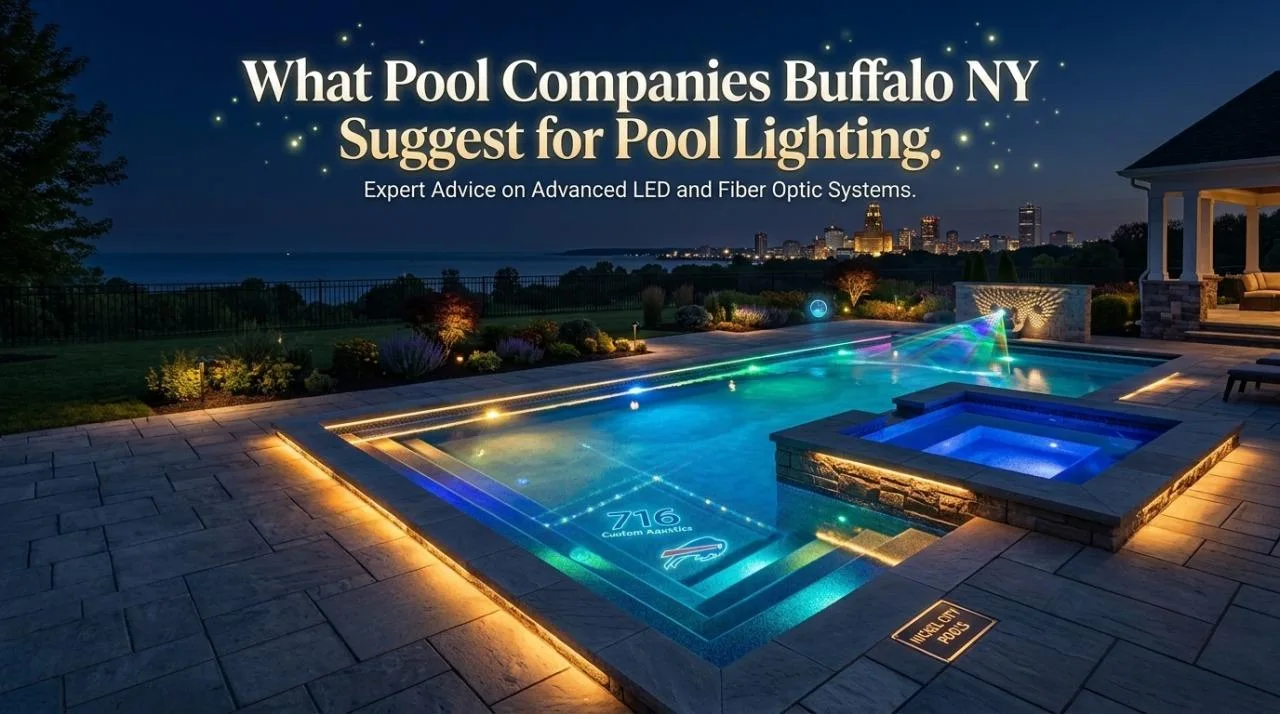
- Color-Changing LED Nicheless Lights: Compact, flush-mounted LED fixtures that insert directly into standard returns or dedicated wall niches. They use up to 80% less energy than halogen bulbs and allow homeowners to cycle through vibrant color shows or static warm tones.
- Underwater Perimeter and Step Lighting: Specialized low-voltage LED lights placed strategically along steps, sun shelves, and swim-outs to ensure safe entry and exit during nighttime swims.
- Fiber Optic Lighting Systems: A non-conductive option where light travels through fiber optic cables from an external illuminator. While less bright than LEDs, fiber optics excel at creating subtle “starfield” floor effects and water feature highlights.
- Halogen Pool Fixtures: High-intensity traditional bulbs that provide intense brightness across large pool volumes. While offering lower upfront fixture costs, they consume significantly more electricity and require more frequent bulb replacements.
Strategic Light Placement and Design Principles
Proper fixture positioning makes the difference between a harsh glare and an inviting backyard oasis. Leading outdoor living professionals evaluate pool geometry, deck seating areas, and architectural sightlines before placing underwater niches.
Recommended placement practices include:
- Pointing Lights Away from Main Seating: Installing fixtures on the pool wall closest to the patio or house so the beam faces away from guests, avoiding direct eye glare.
- Cascading Step and Shelf Illumination: Mounting micro-LED lights along tanning ledges and bench seating to prevent shadowy depth misjudgments.
- Highlighting Water Features: Positioning underwater uplights directly beneath sheer descents, waterfalls, or bubblers to illuminate moving water effects from within.
Smart Pool Automation and Color-Changing Controls
Modern pool illumination integrates seamlessly with smart home automation platforms. Instead of relying on manual wall switches or mechanical timers, pool owners can manage light shows, brightness levels, and custom schedules directly from a smartphone or tablet.
When planning a comprehensive backyard installation, partnering with established pool companies buffalo ny ensures that smart automation hubs, low-voltage transformers, and GFCI breaker systems are installed safely and in strict accordance with local building codes.
Surrounding Hardscape and Landscape Lighting Integration
Underwater lights represent only one layer of a complete evening lighting design. To create a cohesive outdoor atmosphere, pool builders recommend integrating surrounding landscape and hardscape illumination.
- Copings and Wall Cap Lights: Undermount LED strip fixtures installed beneath coping edges or retaining walls cast a warm glow downward onto walkways and pool decks.
- Path and Garden Bollard Lights: Low-voltage stake lights positioned along garden beds and concrete walkways prevent tripping hazards around wet pool decks.
- Tree and Architectural Uplighting: Spotlights aimed at nearby mature trees or pergola structures add vertical depth and prevent the pool from looking isolated in a dark yard.
FAQs
1. How many underwater lights does a standard inground pool require?
For a standard 16′ x 32′ rectangular pool, one large LED fixture or two compact nicheless LED lights generally provide even coverage without dark spots or excessive glare.
2. How do Buffalo’s severe freeze-thaw cycles affect underwater pool lights?
High-quality sealed LED niches are engineered to handle winter freezing. During end-of-season winterization, water levels are lowered below the return line, and nicheless light cords are coiled inside sealed niches or protected with winterizing plugs to prevent water intrusion damage.
3. Can existing halogen pool lights be converted to LED fixtures?
Yes. Many manufacturers produce universal retro-fit LED bulbs and complete light assemblies designed to fit directly into existing wet niches without needing new conduit runs.
4. Are low-voltage (12V) pool lights safer than line-voltage (120V) lights?
Yes. Low-voltage 12V LED systems operate through a step-down transformer and are widely preferred for residential pools due to significantly higher electrical safety margins.
Conclusion
Choosing the right pool lighting strategy enhances both the safety and aesthetic value of your Western New York outdoor space. By combining energy-efficient LED technology, thoughtful fixture placement, smart automation controls, and supporting landscape lights, you can create a stunning evening sanctuary. Working alongside licensed local builders ensures your pool lighting system operates reliably and safely for years of nighttime enjoyment.