


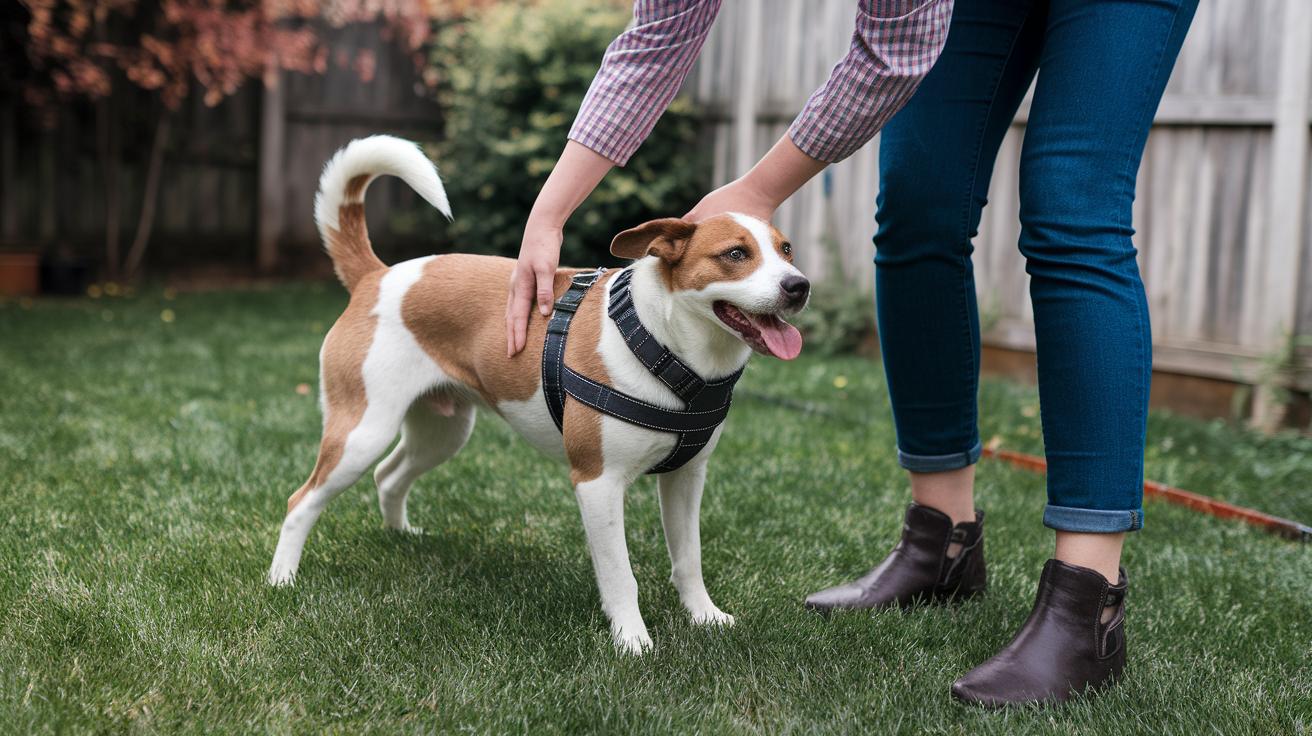
Ever wonder if there's a little trick to making dog walks super smooth? Getting your buddy ready with the right harness is easier than you might think if you stick to a few simple steps.
Imagine your pup putting on a snug, comfy harness, it’s like a little jacket that fits perfectly. With the right gear, your walk becomes a safe and fun adventure for both of you.
In this friendly guide, we’ll chat about simple ways you can calm your dog and adjust every strap just right. Next time you head out, your walk will be as breezy and enjoyable as a stroll in the park with your best friend.
Step-by-Step Guide to Putting on a Dog Harness
First, make sure your furry friend is calm. Lay the harness on a flat spot and check that all the buckles and clips work well. Did you know that a well-fitted harness makes walks safer and more comfy for your pup?
Next, figure out how your harness is meant to be used. For many models, like the trusty EzyDog, you might gently slide your dog's front legs into it or drape it over their back – kind of like helping a buddy into a soft jacket.
Then, adjust the harness so the chest and shoulder straps match your dog's natural shape. The straps should rest smoothly along the ribcage without bunching up. Remember, keeping everything in line helps avoid choking and stops any unnecessary strain on the neck.
After that, fasten every clip and buckle securely. Start with the neck loops and then the chest straps. Make sure each part feels snug but not tight – you should be able to slip two fingers between the strap and your dog's body with ease.
Finally, give the harness one more once-over. Run your hand along it to catch any loose ends or spots where your pup might wiggle out. It’s a good idea to recheck after a few minutes of play to ensure the fit stays safe and comfortable.
Selecting and Measuring for the Ideal Dog Harness

First, grab a soft measuring tape and find your pup’s perfect fit. Wrap the tape around your dog's chest right at its widest part, usually just behind the front legs, and make sure it's snug but not tight. You should be able to slide in two fingers easily. This little trick ensures the harness will be comfy and safe.
Next, measure your dog’s neck at the spot where the collar usually sits. Keeping the tape level both on the chest and neck guarantees a balanced fit without causing any discomfort while your dog is on the move.
Remember these tips:
- Use a soft tape measure for both the chest and neck.
- Keep a two-finger gap to allow for easy movement.
- Check your numbers against a sizing chart or detailed guide to choose the right harness.
Once you’ve got your measurements, opt for a harness with adjustable straps so you can tweak the fit perfectly. With the right measurements, you’ll have a secure harness that lets your furry friend roam freely and enjoy every walk.
Types of Dog Harnesses and Their Impact on Fit
A standard harness gently hugs your dog’s neck and ribs while offering a top D-ring for leash attachment. It’s designed to be super simple, just slip it over your furry friend’s back and buckle it securely. Fun fact: many pups find this cozy fit as comforting as a warm blanket on a chilly day! Plus, the way it spreads out pressure evenly helps keep your pet safe and happy.
Next up is the step-in harness, perfect for dogs with loads of energy or those with a larger build. Instead of pulling it over the head, your dog steps right into it, and you just fasten the side straps. Imagine your pup eagerly stepping forward, ready to zoom off for a game of tag, this harness fits perfectly without the hassle of clamping around the neck. It’s quick to put on and stays snug even during the most playful moments.
Lastly, the front-clip harness is crafted to help reduce pulling by positioning the leash clip on the chest. This smart design shifts the pressure in a way that works well for dogs known to tug along on walks. Every harness has its own special way of fitting, and as designs continue to improve, these clip fasteners are getting even better at meeting your dog’s unique needs.
Adjusting Harness Straps for Comfort and Security

When getting your dog ready for a walk, make sure the harness fits just right. Adjust each buckle and clip so you can easily slide two fingers between the strap and your dog's body – this way it won't be too tight or too loose.
If your furry friend is sporting a jacket or sweater, tuck the harness underneath. This little trick helps keep everything in place, even during the most playful romps.
After a quick stroll, take a moment to check that all the fasteners are still snug and comfy. Some harnesses, like the EzyDog, come with quick-release buckles that make putting it on and taking it off a breeze.
- Adjust buckles so you can fit two fingers between the strap and your dog.
- Place the harness under any outerwear your pet might be wearing.
- Recheck all the straps after a short walk.
- Enjoy the ease of quick-release buckles for simpler, fuss-free adjustments.
Troubleshooting Common Dog Harness Fitting Issues
Even a perfectly chosen dog harness can sometimes cause problems that might risk your pet's safety. When a harness is loose, your dog might wiggle free or twist around too much. If you notice your pup squirming or shifting, try adjusting the straps so the harness stays in place. For example, if your dog almost slips out during a game of fetch, check and realign the straps for a snug fit.
On the other hand, if the harness is too tight, it could rub and irritate your dog's skin. After walks, always take a quick look at your pet’s skin for any red marks or signs of discomfort. If you spot any issues, loosen up the harness until you can comfortably slide two fingers between it and your dog.
Remember, different breeds may need different adjustments. A Bulldog might need extra strap security, while a German Shepherd might do just fine with a standard fit.
Here are a few quick tips:
- Adjust the straps if your dog seems ready to escape.
- Check your pet’s skin after each outing.
- Adapt the fit to suit your dog's unique needs.
A little patience goes a long way – even small tweaks can make your dog feel secure and comfortable.
| Mistake | Fix |
|---|---|
| Loose harness | Reposition straps to stop rotation |
| Too-tight harness | Loosen until there’s a two-finger gap and check for skin irritation |
Final Words
In the action, we explored a clear, step-by-step guide that shows how to put on a dog harness safely and comfortably. We walked through checking measurements, selecting the right style, and adjusting straps for that snug, two-finger gap fit. We also tackled common fitting issues so your pet can enjoy every walk without stress.
This guide reflects practical tips and real-life insights, small steps that build a happier, healthier life for your best friend. Enjoy every moment with your furry pal!
FAQ
How do I put on a dog harness correctly for the first time, and where can I find a diagram or easy guide?
Putting on a dog harness correctly for the first time means following a clear, step-by-step process. Many guides offer helpful diagrams or video examples to visually show how to align straps and secure all clips.
How do I secure harnesses with buckles or multiple clips on my dog?
Using a harness with buckles or multiple clips involves fastening each buckle, adjusting straps to allow a two-finger gap, and ensuring all clips are properly locked to keep your pet secure and comfortable.
How do I properly fit a harness on a small dog?
Fitting a harness on a small dog means measuring carefully and gently adjusting the straps. The harness should be snug yet leave enough room for two fingers between the strap and your dog’s body.
How do I put on a step-through harness and identify the front of the harness?
Placing a step-through harness involves guiding your dog to step between its legs and then fastening the side straps. The front is usually marked by the control clip positioned over the chest area.
What are the differences in putting on various types of dog harnesses, including control, standard, and step-in styles?
Putting on different harness styles varies: a standard harness wraps around the neck and chest, a control harness adds a chest clip for extra grip, and a step-in style lets dogs easily insert their legs before securing.
Where can I watch a video on putting on a dog harness?
Watching a video on putting on a dog harness means checking YouTube for clear, step-by-step tutorials that demonstrate proper fitting techniques and adjustments in real time.
Why might some dog trainers advise against using harnesses?
Some dog trainers advise against harnesses because an improper fit may strain joints or allow escapes. They recommend careful fitting or alternative options to maintain natural movement and safety.