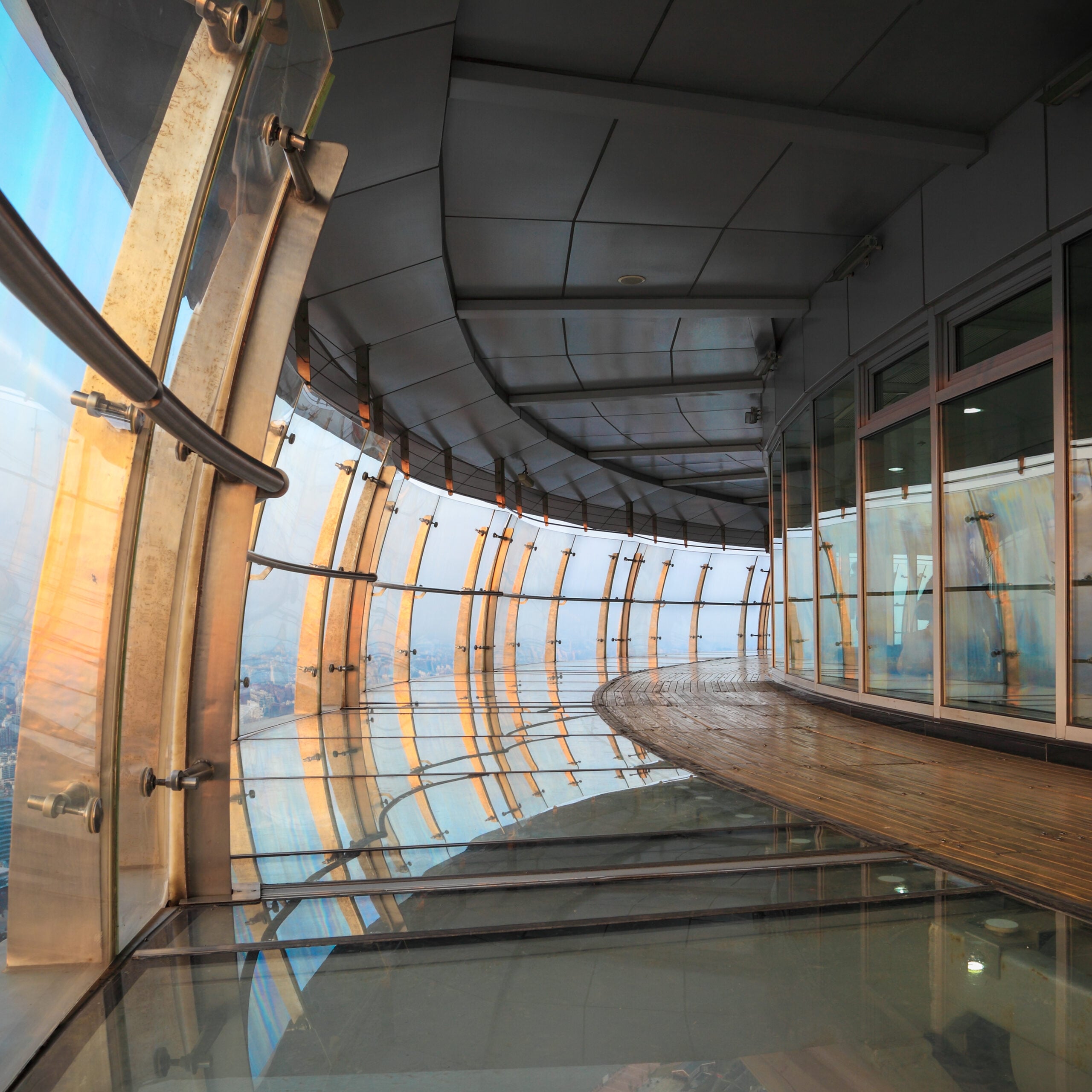
When architects dream up glass floors, skylights, and walkable bridges, they’re chasing a singular effect: the illusion of walking on air. But achieving that illusion safely and durably comes down to material choice. While acrylic once seemed like a lightweight, budget-friendly option, structural glass has emerged as the clear winner for walkable applications. Here’s why.
Clarity That Lasts
One of the biggest selling points of any transparent walkable surface is, unsurprisingly, its transparency. Acrylic starts out clear, but over time, foot traffic takes its toll. Acrylic is a softer material by nature, which means it scratches easily. Every scuffed heel and dragged chair leaves a mark, and those marks accumulate into a hazy, scratched surface that undermines the very effect the installation was designed to create.
Structural glass, by contrast, is engineered to resist scratching and abrasion far better than acrylic. Architectural glass used in walkable applications typically includes tempered or laminated layers that maintain their optical clarity even after years of heavy use. For architects designing a space meant to impress for decades, not just at ribbon-cutting, that long-term clarity is invaluable.
Strength and Structural Integrity
Walkable glass and acrylic installations both need to support significant loads, but they do so very differently. Acrylic tends to flex more under weight, which can create a disconcerting bounce or give underfoot. While this flexibility is sometimes marketed as a safety feature, it can also compromise the rigid, stable feel that makes walkable surfaces trustworthy to pedestrians.
Structural glass, especially when laminated with interlayers designed for safety glazing, offers a much stiffer platform. It’s engineered specifically to handle dynamic loads common in walkable applications, from a steady stream of foot traffic to momentary concentrated loads like someone pausing to take a photo. This rigidity translates into a feel of permanence and reliability that acrylic struggles to match.
Resistance to Environmental Wear
Outdoor and semi-outdoor walkable installations face relentless exposure to sunlight, temperature swings, and moisture. Acrylic is particularly vulnerable to UV degradation. Over time, sunlight can cause acrylic to yellow, become brittle, or develop microcracks known as crazing. These issues aren’t just cosmetic; they can compromise the material’s structural performance, especially in applications that bear repeated loads.
Structural glass, on the other hand, is far more resistant to UV exposure and temperature fluctuations. It maintains both its visual appeal and its structural properties across a wide range of climates, making it a smarter long-term investment for projects exposed to the elements. This durability reduces the likelihood of costly replacements and keeps maintenance demands manageable.
Fire Safety and Building Code Compliance
In many commercial and public applications, fire safety ratings are non-negotiable. Acrylic is a petroleum-based plastic, and like most plastics, it can be more flammable and prone to releasing toxic fumes when exposed to high heat. This makes acrylic a less attractive option in applications where fire codes demand materials with proven fire-resistant properties.
Structural glass can be manufactured to meet stringent fire safety and building code requirements, particularly when paired with fire-rated interlayers or framing systems. For architects working within commercial, institutional, or high-traffic public spaces, this compliance advantage often makes structural glass the only viable choice from a regulatory standpoint.
The Aesthetic and Practical Verdict
Ultimately, the comparison between structural glass and acrylic in walkable applications comes down to a simple truth: glass is built to perform under pressure, both literally and figuratively. It holds its clarity, resists wear, withstands environmental stress, and meets the rigorous safety standards that modern architecture demands.
Acrylic may still have its place in short-term installations or budget-constrained projects where durability is less of a concern. But for architects and designers aiming to create walkable glass features that stand the test of time, structural glass remains the superior choice. It’s not just about looking good on day one. It’s about maintaining that same jaw-dropping effect for years to come.